The Secret Diary of Lottie Ware (1909-1921)

Historical Note:
Though diaries and personal journals have existed for hundreds of years, it was only in the beginning of the 20th century that they became common place in a young American girl’s bedroom. A safe place to share her most secret thoughts. For most of my youth the only image I had of my Grandma Rose was a tiny, shriveled old lady who always seemed worried about something. As I explored her younger years, I was surprised to learn what an independent, career-woman she was, especially for the early 20th century. The most likely reason I never knew this Lottie was an event that happened decades before: it would traumatize not just her but Grandpa Ed: the accidental death of their son Robert.
This dramatized diary would have been penned long before that dark period, when Lottie was just a young girl filled with her own career ambitions and dreams of love and marriage, in the tiny town of Metamora, Michigan.
The New Diary
“Happy Birthday, Dear Lottie, Happy Birthday to you…” Of the things about a birthday party Lottie dreaded, having everyone sing to her was the worst. She was embarrassed when everyone looked at her and even hearing them all sing her name made her want to run from the room. But it was after all her 18th birthday and she could hardly protest all Mother’s preparations and pleasure: baking a special cake and getting out the good china.
“Make a wish,” her brother Fred was saying. “Blow out all those candles if you can!”
The cake was good, as always and then came the next most dreaded part of any Ware Family birthday party: the presents. Not that Lottie disliked getting presents (no on really does) but she found it so awkward to smile and look normal while doing it. She hated being the center of attention.
In 1909, children rarely got more than one birthday present. And even though her father, John, was quite successful in his greenhouse business, children did not expect more. “Happy Birthday, Dear Lottie,” Mother said sweetly as she handed a small, carefully wrapped package to Lottie.
“Make a guess!” Fred teased. What do you think it is?” Lottie didn’t reply as she had learned a long time ago that Fred talked too much and no one really expected her to answer every one of his demands. But she did begin opening it, fingering the pretty giftwrap and carefully removing the ribbon that held it together (there was no cellophane tape in her day). Even before she saw what it was, she could tell it was some kind of book. She often got books for Christmas and birthdays. But as she examined this one it was different. There were no gold letters stamped on the front–no markings at all. The book had lovely gold edged pages with a brown leather cover. Strangely, it had a leather latch with a small brass button to snap it closed. Lottie opened it and saw that the pages were blank. There were no words in this book. She had never seen such a thing before.
Mother could tell by Lottie’s puzzlement that she was a bit confused “It’s called a diary, Dear. It’s a book you write. You can write anything you want. And that clasp on it keeps it private so other people don’t read it unless you want them to.” Lottie glanced up at Fred briefly and saw something she didn’t appreciate in his face. Mother saw it also and gave a stern look at Fred.
At first, Lottie didn’t know what to write in her new diary. She was not used to expressing her thoughts or feelings most of the time. But over the next months, she would occasionally think of something to add. She found that when something different was going on, it was a bit easier to write about it. That is how she came to write this entry, on June 7, 1911.
“Dear Diary,
“Father announced to the family that we will be moving to a new house soon. It has a farm and is in a town called Metamora. I am going to miss our house in Northville since I have lived here as long as I can remember. I wonder if there are any girls my age? I wish I had a friend. I wonder if there are any boys? Many girls my age are already married and having babies.”
Lottie was a little embarrassed writing her secret thoughts. She could hardly believe that she said that about boys. She thought about it a lot but had never dared talk about it with anyone. She wondered what Mother would say about that–she knew what Fred would say! He would make fun of her and probably tell everyone. She was more determined than ever to keep her diary private. She would always hide it in the back of her closet from now on. But it was also more than a little exciting to put those things on paper. It made them feel more real than they ever had before.
Life in Metamora
Lottie and the Ware family moved to Metamora and settled into their new home. Though their previous home in Northville, Michigan was a house, in Metamora John built a successful farm operation. His background growing commercial flowers in Detroit naturally led to growing them in Metamora. But another business was taking Metamora by storm and John was smart enough to get in on it: horses. About the time they first moved, wealthy gentlemen from Detroit with a passion for fox hunting began making trips to Metamora with its rolling hills and thick woods. The interest grew rapidly and John started raising his own horses and built a stable to accommodate others. By the time Lottie was 25, still single and living at home, the family business had expanded so much she kept busy there, mostly in the house helping her mother, while her father and brothers worked the farm.
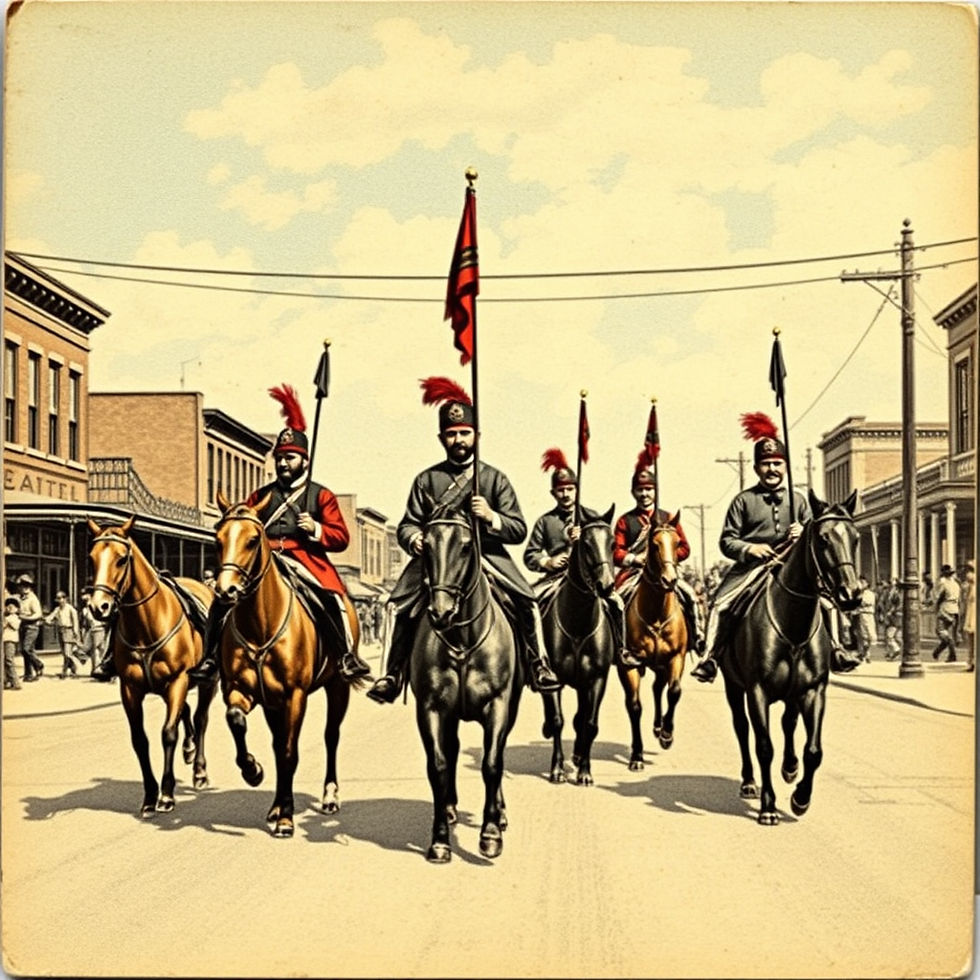
Lottie was still shy and often fearful. She often helped with outdoor chores as well as indoors but avoided riding horses herself. She was also increasingly lonely and a diary entry from 1918, when she was 26 years old, reflected some of her sadness. It was written during the Spring Hunt: when gentlemen hunters from miles around donned their fancy clothes, brought their horses and noisy fox hounds to Metamora.
April, 1918
Dear Diary,
Our whole village is preparing to welcome folks from all around to the first ever Spring Hunt. Gentlemen from Detroit have been hunting here for years but they now have what they call a hunting club. They held the first from their club last week. We have never seen so many visitors in town. Our local Whitehorse Inn was filled to capacity with overnight guests and the tavern always had a line waiting to get a table. I have seen fox hunts before but nothing as grand and colorful as this one.
The gentlemen worse special dark blue hunting coats with bright yellow riding breeches. They wore shiny black boots that reached to their knees.
Each one wore high shiny black leather boots. They looked so proud propped up in their saddles. There were many rules to follow in this formal hunt–more than before when the men just rode into the hills following their dogs. A few of the men wore scarlet red coats with their breeches and boots. They looked particularly stunning. Father said they were called masters of the hunt and allowed to wear the colors as a special honor because of their importance in the club.
Because it was so special, Fred came home to visit. When we moved here he stayed in Northville and continued working at Mr. Brown’s greenhouse in Detroit. He brought a man named Ed Rose.. Mr. Rose works at the greenhouse with Fred. He was polite but not very talkative–not at all like Fred!
Fred’s introduction was so embarrassing. “Eddie, this is my sister Lottie,” he said. “She’s single and knows how to cook!” He winked at me and jabbed Mr. Rose in the ribs. I think Mr. Rose was just as embarrassed as I was. We never talked to each other, of course. I don’t believe he had any interest in talking to me. That was the only time I saw him at the Hunt. He and Fred were too busy watching the horses.
Longings
First Sunday of Advent, December 1918
Dear Diary,
Today was the first Sunday of Advent at our church in Metamora, Pilgrim Congregational. I love Advent season not only because it means Christmas will soon be here, but because it reminds us of the first Christmas story: the story of Mary and Joseph and the birth of the Baby Jesus.
The sermon today was about Mary, taken from the Gospel of Luke. The verse said that Mary “pondered all these things in her heart.” I was struck by the thought that Mary had many things she could only think in her mind but few she could talk to about them. I wondered if she was shy, like me:? But then I remembered how different also. And the difference made me sad: Mary was engaged to be married. Mary was going to have a baby!
I am often reminded of how alone I am. So many women my age already have husbands and children. I am still living with my mother and father.
When I was a little girl I pretended to be a mother. I wrapped my doll in a linen and rocked him gently to sleep, singing lullabies. Fred laughed at me once when he saw it so I was careful not to do it when others were around. But, like Mary, I pondered these thoughts in my heart. And lately, the thoughts have turned more to sadness than ever. Will I ever have a baby of my own? Will I ever sing lullabies? Will I ever have a just man like Joseph to share my life with?
Fourth Sunday of Advent, December 1918
Dear Diary,
Today as we were waiting for church to begin, I turned around and saw Fred seated in the back. He smiled and waved at me and I tried to smile back (though I felt a bit embarrassed). I also noticed that he was sitting with his friend from the greenhouse, Mr. Rose. I was very embarrassed now and turned quickly away. I had not expected to see him again! I had a hard time paying attention to the sermon that day and felt a little guilty. I couldn’t help but wonder why Mr. Rose was here.
As I feared, Fred brought him home to our house for Sunday dinner. It only frightened me because I didn’t want to appear awkward. And, I was also afraid that he might talk to me and I would not know what to say.
At dinner, he seemed more comfortable being with our family than before. He talked with Father about the flower business and brought news of Mr. Brown’s expanding operation. Fred seemed to like Mr. Rose a lot and boasted about how he was advancing into a management position in one of the greenhouses and, jokingly said that one day Eddie would own the whole thing! This time, Mr. Rose just laughed in amusement at the humor and didn’t seem embarrassed by it. He had a nice smile. Every once in a while I almost thought he was looking at me. Normally that would have terrified me. But now it didn’t. In fact, it made me want to look at him more.
Though he was a plain man, he seemed quite strong. When he spoke, he sounded more confident. He seemed so different from the first time I saw him. It was almost as if this was a different man.
We didn’t talk to each other today, though as he and Fred were preparing to leave, he did look at me and smile. He actually looked into my eyes and I saw his eyes smile, not just his mouth. It even seemed like he fixed his eyes on mine for longer than he did Father or Mother’s.
It is now late and I need to go to sleep. Tomorrow Mother and I will bake pies for Christmas. I really hope I can sleep. But for now, I cannot seem to stop thinking about Eddie–I mean, Mr. Rose.
Joy
Over the next three years, Ed Rose was increasingly seated at the Ware dinner table on Sundays. At first he always showed up with Fred. But over time, he came alone. And it was obvious to all that it wasn’t for the roast chicken. Lottie had never been more happy.
August 1920
Dear Diary
In church today, seated in our usual pew by Mother and Father, as we stood to sing the first hymn, I was surprised to see Ed standing in the aisle, looking at me, and by his eyes requesting permission to sit in our row. I realized immediately that it meant he would be sitting right beside me. Mother and Father were on my right. What should I do? With all my heart I wanted to sit beside him. But I was also afraid in that moment that he would think me too forward. Shold I move to the other end of the pew, leaving Ed to sit by my parents?
In the turmoil of my uncertainty, a most unexpected thing happened next. He put out his hand and ever gently touched my arm. He could tell I was getting ready to move down and with his hand and his friendly eyes he assured me I should stay. He stepped beside me and, since I was holding a hymnbook, he gallantly took his share of it and, just like that, we were standing side by side, singing in church, and in that moment I felt as though the whole congregation was singing to us.
—-
The turn of events that day was dramatic, not just for Lottie but for the family.. Unknown to Lottie at the time, Ed had already approached her father about his intentions. John was pleased to give his blessing to their courtship. Ed assured her father that he could support her financially, He had big plans for the future, including purchasing his own farm in Metamora someday. This was especially pleasing for John and Martha was excited at the prospect of grandchildren growing up nearby. When John asked about the timeline, Ed had thought about that also. He would ask Lottie to marry him soon with a wedding next year.



Comments